
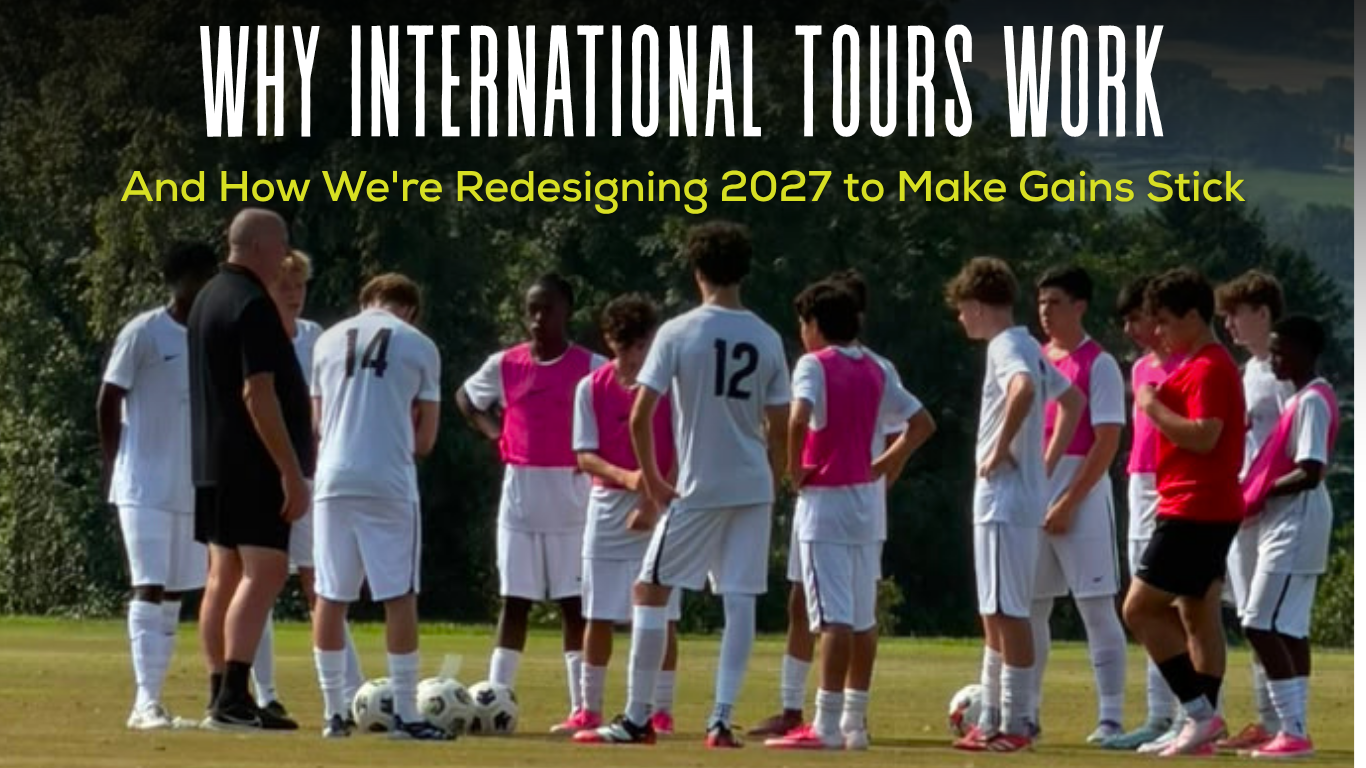
Many of you may have been away with your club teams this summer or even with NCE on our Gothia, Pro Pathway or Pro Academy Tours. You may be noticing what’s become clear to us over the years.
For over a decade, we’ve taken players of all ages to England, Brazil, Italy, Sweden, Spain, and Denmark. We’ve watched something repeat itself every single summer: remarkable player development happens during the tour. Then it stops. Players return home to their club environment and, within weeks, fall back into old patterns. The higher standards they discovered abroad quietly fade.
This is the problem we’ve set out to solve with the 2027 Pro Academy Tour format. And it starts with understanding what actually happens during an international development tour.
Why International Tours Shift Player Development
There’s a reason we focus so heavily on our international events as player development tools. It’s not about exposure or tournament wins. It’s about placing players in an environment that demands they raise their game simply to compete.
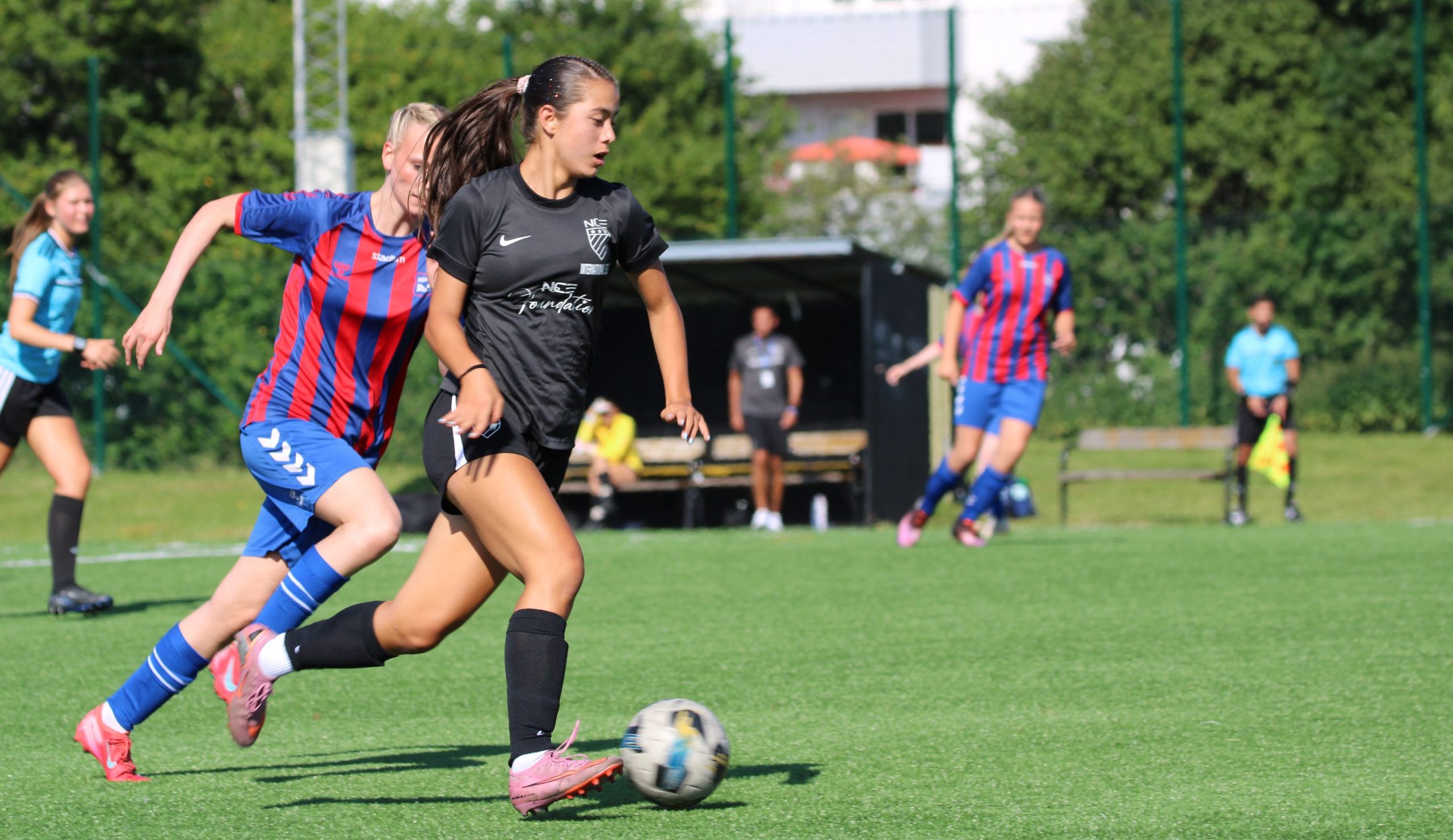
At home, even strong players operate within a known system. They understand the pace, the tactical patterns, the physical demands. An international tour strips all that away. Players arrive in a new country facing opponents who play the game differently—faster, more physical, with different movement patterns and tactical approaches. The gap between what they think they can do and what they’re actually seeing forces something to happen: adaptation.
The best part is, this isn’t theoretical. Over the years, we’ve tracked the same pattern consistently across every tour location. 20 mins into their first game, every player experiences the same realization: they’re not ready for this level.
The Reality Check: What Happens in Week One
If you’ve never watched a group of players encounter a significantly higher level of play, it’s striking. I describe it as a rabbit in the headlights. Players are dumbstruck by the difference they’re experiencing and struggle to make the shift. We call it the reality check.
The physicality alone is often the first shock. Players find themselves facing kids who are stronger, faster, and willing to engage physically in ways they’ve rarely experienced. The ball speed is quicker. Defensive pressure comes from multiple angles simultaneously. Possession is harder to keep. Mistakes are punished immediately.
For many players, this shows up as hesitation (rabbits in headlights). They feel the gap in quality and it affects their decision-making. Passes they’d normally attempt are reconsidered. Runs they’d normally make seem too risky. Some players describe feeling like they’re thinking in slow motion while the game moves at a different speed altogether.
This isn’t a failure. It’s essential feedback.
The Adaptation Phase: Why Players Struggle (and Why It Matters)
Here’s what’s critical to understand: the struggle in the first few games isn’t the problem. It’s the solution.
Once players acknowledge the gap—once they stop expecting to perform at their normal level and start experiencing what higher performance actually looks and feels like—adaptation begins. This doesn’t always happen consciously and it’s not necessarily a coached moment. Often it’s a survival instinct meeting a higher demand.
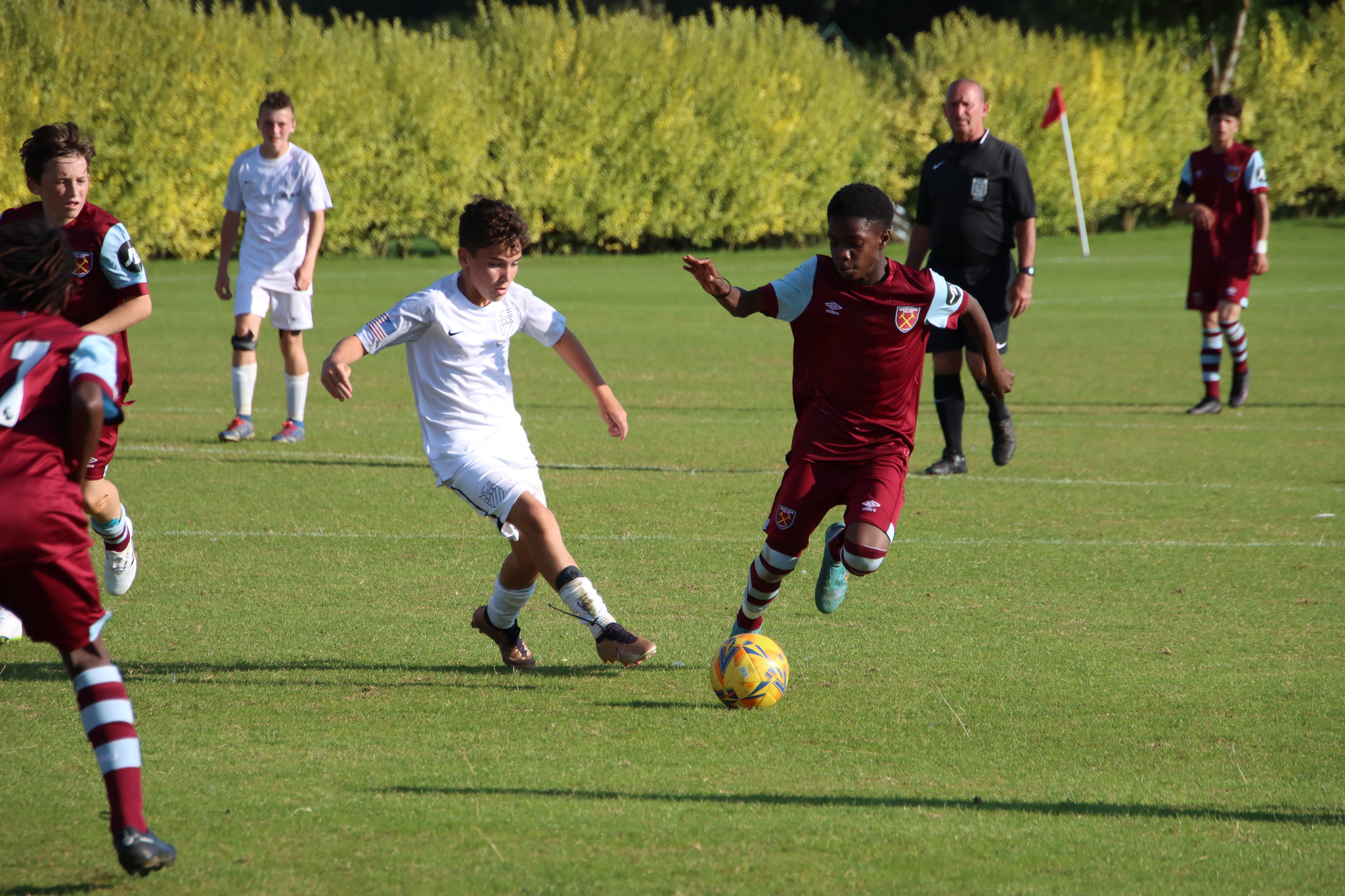
By game three, you start seeing small improvements. They begin to match the opposition’s physicality and give as good as they get. Their decision making slowly begins to catch up with the speed of play. They take less touches, understanding that they no longer have the time to dwell on the ball.
These micro-adjustments accumulate. By the middle of the tour, players are no longer just reacting to the gap. They’re starting to narrow it.
The Development Curve: How Players Progress During Tours
This is where the real development happens, and it’s observable. By games 5 and 6, the same players who looked lost in their opening matches are now competing effectively. They’re reading the game better. Their technical execution improves under pressure. Their physical engagement increases because they’ve adapted to the pace and physicality.
More importantly, their standards shift. What felt impossibly fast in week one feels normal by week three. The intensity they initially couldn’t match becomes their baseline. Players start expecting higher physicality, quicker decisions, and more efficient movement—because that’s what they’re now doing regularly.
By the end of a tour, we see measurable improvement in match performance. Players complete more passes under pressure. They win more contested balls. They make faster decisions. Some of this is confidence. Most of it is genuine skill development driven by consistent exposure to higher demands.
We’ve seen this with every age group and every location. The mechanism is the same: raise the environment, and players rise to meet it. Your player isn’t lacking ability. Most US players aren’t. What they lack is opportunity—exposure to the standards they’re actually capable of meeting.
The Return-Home Problem: Where Most Programs Fail
Then they go home.
Within a week of returning to their club environment, something shifts backward. Slowly, predictably, the standards they discovered abroad begin to fade. The intensity of training doesn’t match what they experienced on tour. The opposition they face is less demanding. The pace of play drops back to what they knew before they left.
Within a month, most players have regressed toward their pre-tour baseline. Not completely—there’s usually some residual gain. The habits formed during the tour, the higher standards they discovered, the physical and technical improvements: they gradually dissolve in a less demanding environment.
This isn’t the player’s fault. It’s environmental. Humans adapt to their context. When the context changes back, adaptation follows.
For years, we’ve struggled with this. How do you preserve the development that happens on tour? How do you prevent regression? How do you make the gains stick for longer?
The answer, we’ve realized, isn’t to extend the tour. It becomes too costly for families and as a result fewer players can benefit. It’s to extend the intensity of learning through a different structure.
How We’re Rethinking the Summer Format for 2027
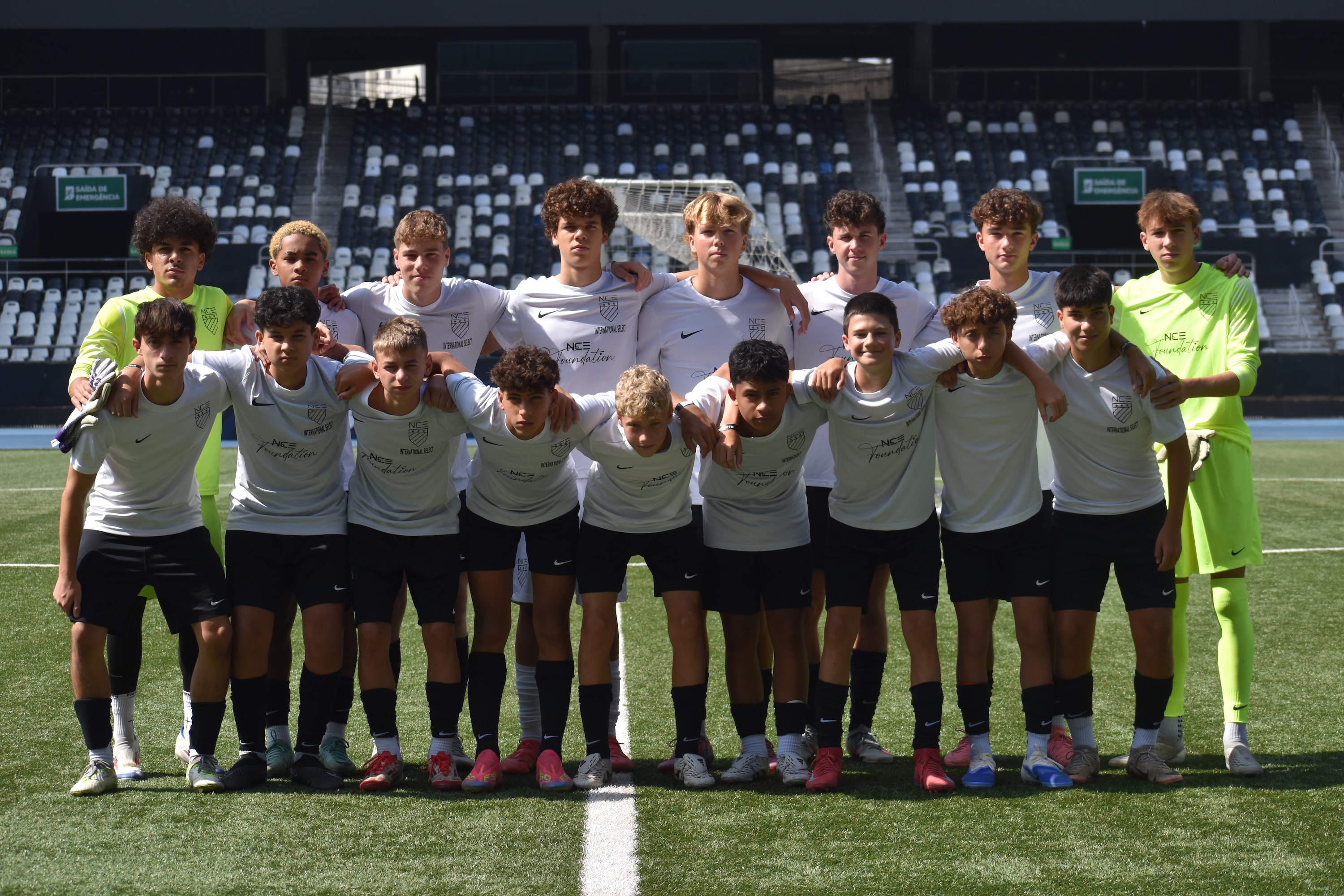
The 2027 Pro Academy Tour introduces a redesigned summer format built specifically to address the regression problem. Instead of one intensive tour block, we’re implementing two competitive tournaments separated by a focused adaptation period.
Here’s the strategic thinking: the first tournament exposes players to the level and creates that essential reality check. The gap becomes clear. Players understand what they’re working toward. But a single tournament, no matter how intensive, isn’t enough time for new standards to become internalized.
The gap between tournaments becomes a deliberate learning window. Players reflect on what they discovered in tournament one. They understand specifically where they need to improve. We provide focused training on those gaps—not generic session work, but targeted development based on what they learned about their own level.
Then tournament two arrives. Now players aren’t just exposed to higher standards again. They’re actively testing whether they’ve closed the gaps they identified. This second exposure reinforces the lessons learned in tournament one. The new standards stop feeling foreign and start feeling familiar.
Two Tournaments, One Clear Purpose
Tournament One: The Welsh Challenge Cup
The Welsh Challenge Cup in North Wales is built to expose our U13 and U14 players to competitive, physically demanding opposition. The tournament structure ensures consistent high-level matchups. The goal isn’t medals. It’s clarity. By the end of tournament one, every player knows exactly what the gap looks like and specifically where they need to improve.
Tournament Two: The NCE Summer Challenge at Stonyhurst College
The brand new NCE Summer Challenge at Stonyhurst College is positioned perfectly to help our players measure their progress. Players have had time to work on the gaps they identified in tournament one. Now they test whether that work translated to actual improvement. The tournament format allows us to track individual player development across a series of competitive matches.
Between the two tournaments, players don’t drift back into a lower standard. They’re continuously held to higher demands. The interval isn’t a regression period—it’s an active learning period.
What Parents Should Expect
The 2027 Pro Academy Tour is designed for players serious about development, not just experience. Over ten years, we’ve learned what works: exposure to higher standards, time to adapt, and reinforcement that makes those standards stick.
Your player will likely find tournament one challenging. That’s the point. They’ll also discover specifically what they need to improve. They’ll return with concrete feedback, not a vague sense of “the level.” During the adaptation period between tournaments, they’ll have the opportunity to work on those specific gaps with coaching focused on the European professional standards they observed.
Tournament two will feel different. They’ll be playing against similar opponents again, but this time they’ll recognize improvement in their own game. They’ll understand what adaptation looks like because they’ve lived it.
Most importantly, when they return home, they’ll have discovered standards they can hold themselves to—because they’ve tested them twice, not once.
Learn More About the 2027 Pro Academy Tour
The detailed tour information, including dates, locations, and player requirements, is available at 2027-boys-pro-academy-tour-info.netlify.app/.
If you have questions about how the dual-tournament format works or want to discuss whether the tour is the right fit for your player, reach out to our team.
Continue Your Player’s Development Journey
If long-term player development is the priority, the environment matters more than the schedule:
- Explore the Elite Soccer Pathway
- Discover High-Performance Soccer Training Programs
- Learn about Pro Pathway Camps
Experience International Development Tours
