
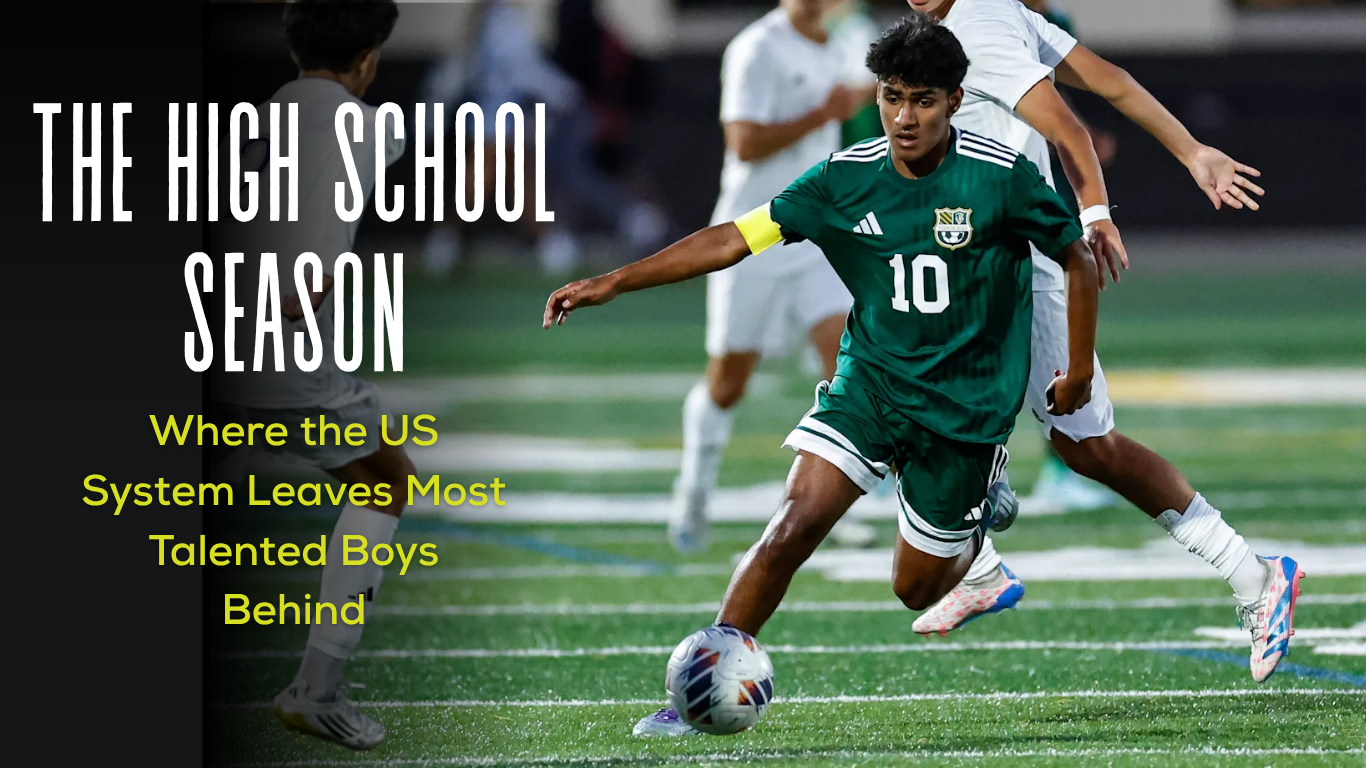
Every fall, in most states, a quiet split happens in American boys’ soccer.
A small group of players at the very top of MLS NEXT keep training in a year-round, professionally run environment. Almost everyone else, including many of the best players in MLS NEXT’s second tier and in ECNL Boys, steps out of their club environment for a full season to play high school soccer.
The gap between those two groups doesn’t close when the high school season ends. It widens. And US Soccer has understood why for more than a decade.
The Rules Behind the Split
MLS NEXT now runs two tiers. In the top tier, the Homegrown Division, made up of MLS club academies and a select group of other leading clubs, players are expected to forgo high school soccer. Waivers exist, but only in narrow circumstances, such as a player whose school place or financial aid depends on playing. Even then, he can’t play both at the same time.
In the second tier, the Academy Division, high school soccer is permitted. MLS presents this as a balance between top-level competition and local play. In ECNL Boys, the decision sits with each individual club, and many allow it.
So the structure is explicit. The top tier is protected. The tier below is released.
US Soccer Already Made This Argument
None of this is new. In 2012, US Soccer moved its Development Academy to a 10-month season and barred Academy players from playing high school soccer. High school associations pushed back hard. But the reasoning was clear: players with professional potential need a year-round, professionally coached environment, and high school soccer can’t provide one.
The Development Academy closed in 2020. The principle it was built on didn’t go away. It simply stopped being applied to most players. Today it protects the top tier only.
If a year-round environment matters for the boys at the top, it matters for the boys just below them.
Why High School Is a Poor Development Environment
This isn’t a criticism of high school coaches, many of whom work hard with limited resources. The problem is structural.
A compressed season. Games come thick and fast. Training time shrinks, and recovery takes priority over learning.
Mixed-ability rosters. A strong player may be training alongside teammates who play recreationally. The standard drops to the group.
Results over development. The goal is to win now, for the school and the season. Players are used where the team needs them, not where they will develop.
Physical over technical. Many high school games reward size, speed and directness. The technical and tactical detail the next level demands gets little room.
Inconsistent coaching. Some programs are excellent. Many are not built around a long-term development plan.
Put a player in that environment for a season every year from freshman to senior year, and the habits it rewards become the habits he keeps.
The Players Who Pay the Price
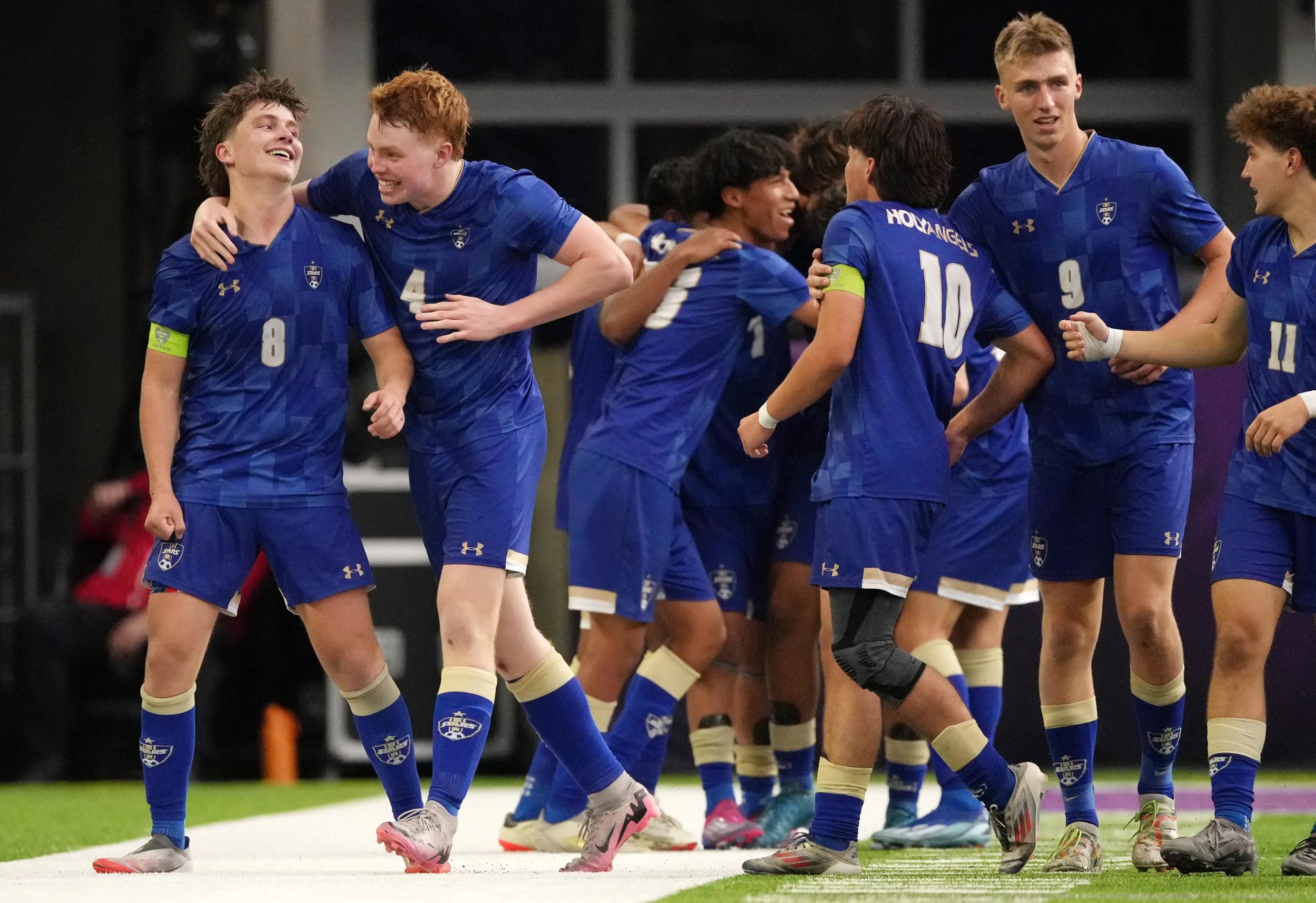
This is what frustrates me most. The boys in that second tier are not a different kind of player from those in the top tier. At 14, 15 and 16, the line between them is often thin. It can come down to one selection decision, a growth spurt that arrived a year later, or living in the wrong part of the country.
I came through the FA’s National School of Excellence and Manchester United’s academy. What I learned there is that development at these ages is driven by environment. Put a good player in a demanding daily environment and he rises to it. Take him out of it and he plateaus.
The US system decides early who gets that environment all year round, then sends everyone else into one that holds them back. Late developers, often the players most likely to surprise us, are the most exposed.
We will never know how many of those boys could have reached the top. That’s the problem. The system makes sure we never find out.
What Families Can Do
Many boys have good reasons to play high school soccer: friends, school pride, the experience itself. If your son plays, the goal is to protect his development while he does.
- Keep technical work going. Short, regular sessions on first touch, ball mastery and decision-making matter more than extra fitness.
- Manage the load. The season is demanding. Prioritize recovery over adding volume.
- Ask his club for a plan. What should he be working on during the high school months, and what happens when he comes back?
- Use the off-season deliberately. Put him back into an environment with higher standards as soon as the season ends.
Where NCE Fits
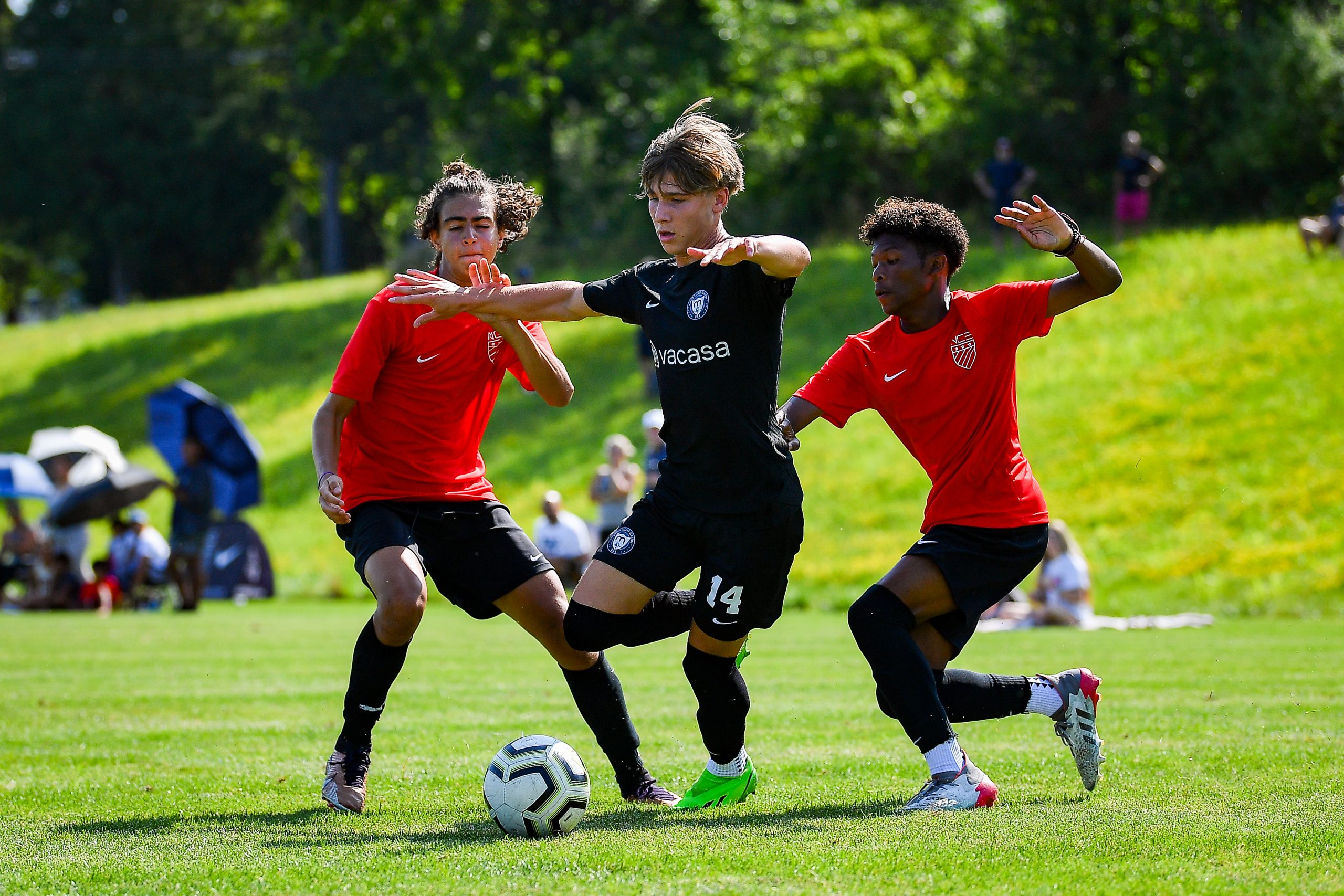
Most of the players we work with at NCE come from exactly this second tier: talented, committed boys the system has decided not to fully invest in. Our job is to give them the environment it doesn’t.
Continue Your Player’s Development Journey
If long-term player development is the priority, the environment matters more than the schedule:
- Explore the Elite Soccer Pathway
- Discover High-Performance Soccer Training Programs
- Learn about Pro Pathway Camps
Experience International Development Tours
