
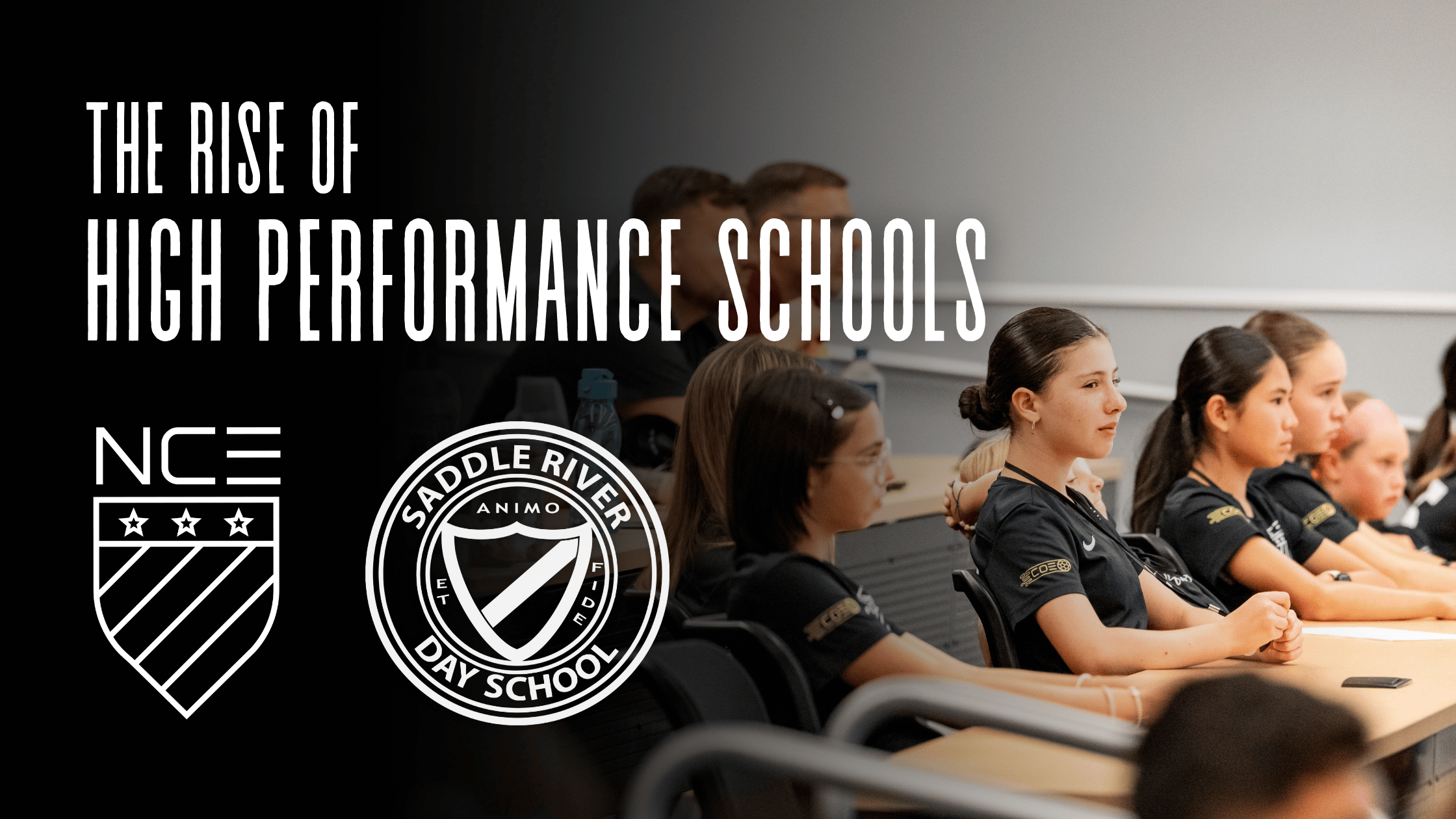
For decades, club soccer was the default pathway for ambitious players.
Two or three training sessions per week. Weekend games. Seasonal tryouts. League branding that parents hoped would signal opportunity.
That structure is now being challenged.
Across the United States, high-performance soccer schools and residential academies are becoming the destination for players who genuinely aspire to reach the highest levels of the game.
Programs such as San Diego FC’s Right to Dream residential academy, Barça Residency Academy in Arizona, the Philadelphia Union Academy, and earlier pioneers like IMG Academy operate inside far more structured, long-term development frameworks.
Increasingly, this is where the most serious players are heading.
Why the Traditional Club Model Has Limits
The club model was built around competition cycles, not daily elite development.
Its structure naturally prioritizes:
- League schedules
- Tournament participation
- Winning games
- Growing and retaining teams
- Team results
- Short-term exposure
The economic model of most clubs depends on team formation, league placement, and visible success. That creates pressure to prioritize outcomes over long-term individual progression.
Winning becomes validation.
Keeping players not progressing them becomes the aim.
Player development becomes secondary to maintaining competitive teams.
What the system rarely delivers is:
- Development focus
- Integrated academic balance
- Controlled physical workload
- Individualized long-term planning
Three or four club sessions per week cannot replicate the training density of professional academy systems.
By U15 and beyond, the difference becomes visible. Players developed inside daily, structured environments mature faster — technically, tactically, and psychologically.
The Professional Academy Blueprint
My own development began inside the FA National School of Excellence and continued within the renowned Manchester United Academy.
Training was embedded into the week.
Standards were daily. Accountability was daily. Development was systematic.
That blueprint is thankfully now appearing in the U.S.
Residential academies and high-performance schools are structured around:
- Morning training integrated into the academic day
- Individual development plans
- Controlled competition calendars
- Professional coaching oversight
- Measured long-term progression
Trophies and ranking points are outcomes. Development is the objective.
That distinction defines the difference between club participation and elite preparation.
Why Structured Environments Accelerate Growth
Elite development requires repetition inside realistic game-like environments.
It requires tactical layering across months and years.
It requires accountability to standards, not simply selection to teams.
Scattered sessions and tournament-heavy calendars cannot provide that consistently.
Daily environments create:
- Technical reinforcement
- Tactical intelligence
- Psychological discipline
- Cultural consistency
This is not about early dominance. It is about sustainable progression. A pathway to excellence.
Where the Best Players Are Moving
The trend is visible. We’ve already seen it with some of our NCE players.
Ambitious families are choosing:
- Residential academies connected to professional clubs
- Full-time development environments
- Integrated academic-athletic pathways
They are not leaving clubs because of dissatisfaction.
They are leaving because time and structure define the ceiling.
Players who aspire to professional or elite collegiate levels require:
- Greater training frequency
- Environmental control
- Consistent standards
- Long-term alignment
High-performance schools provide that alignment.
The Direction of Elite Youth Development
Over the next decade, I predict this model will expand — and accelerate.
The 1994 World Cup produced a measurable participation surge in the United States. The 2026 World Cup is expected to generate an even greater bounce in participation, visibility, and investment.
Increased attention brings increased competition.
More MLS residential academies like the Philadelphia Union Academy.
More residential environments.
More integrated school-based pathways.
Fewer elite players relying on the outdated club soccer system.
At the same time, the professional landscape beneath MLS is evolving. The continued growth of the USL Championship and the wider United Soccer League structure — including the introduction of promotion and relegation — signals a more competitive and performance-driven pyramid.
As the professional ladder strengthens, the demand for better-prepared players will rise.
The development gap is already visible.
With World Cup momentum and a deeper professional structure, it will become increasingly difficult to ignore.
Serious families are positioning early.
This Is Not a Universal Replacement
Club soccer still serves an important role within the broader ecosystem.
But for the small percentage of players pursuing elite outcomes, their daily environment must evolve.
Intensity increases. Standards rise. Volume expands.
That is why elite development schools are growing.
They are not for everyone.
They are for the committed few who know and understand what long term player development actually involves.
Where NCE’s School of Excellence Fits
The NCE School of Excellence was built within this context.
- A structured, high-performance environment.
- Daily training integrated into academics.
- Long-term development planning.
- Selective standards.
It is not a replacement for every player. It is for those who understand that elite ambition requires elite structure.
If your son or daughter aspires to play at the highest level, the question is straightforward: Is their current environment aligned with that ambition?
Explore the NCE Pathway
The NCE Pathway integrates:
- Center of Excellence Training→
- Tournaments→
- Pro Pathway Camps→
- International Tours→
- The School of Excellence→
Standards matter.
Environment matters.
Development is engineered.
If long-term progression is the priority, explore whether the NCE School of Excellence aligns with your child’s goals.
