
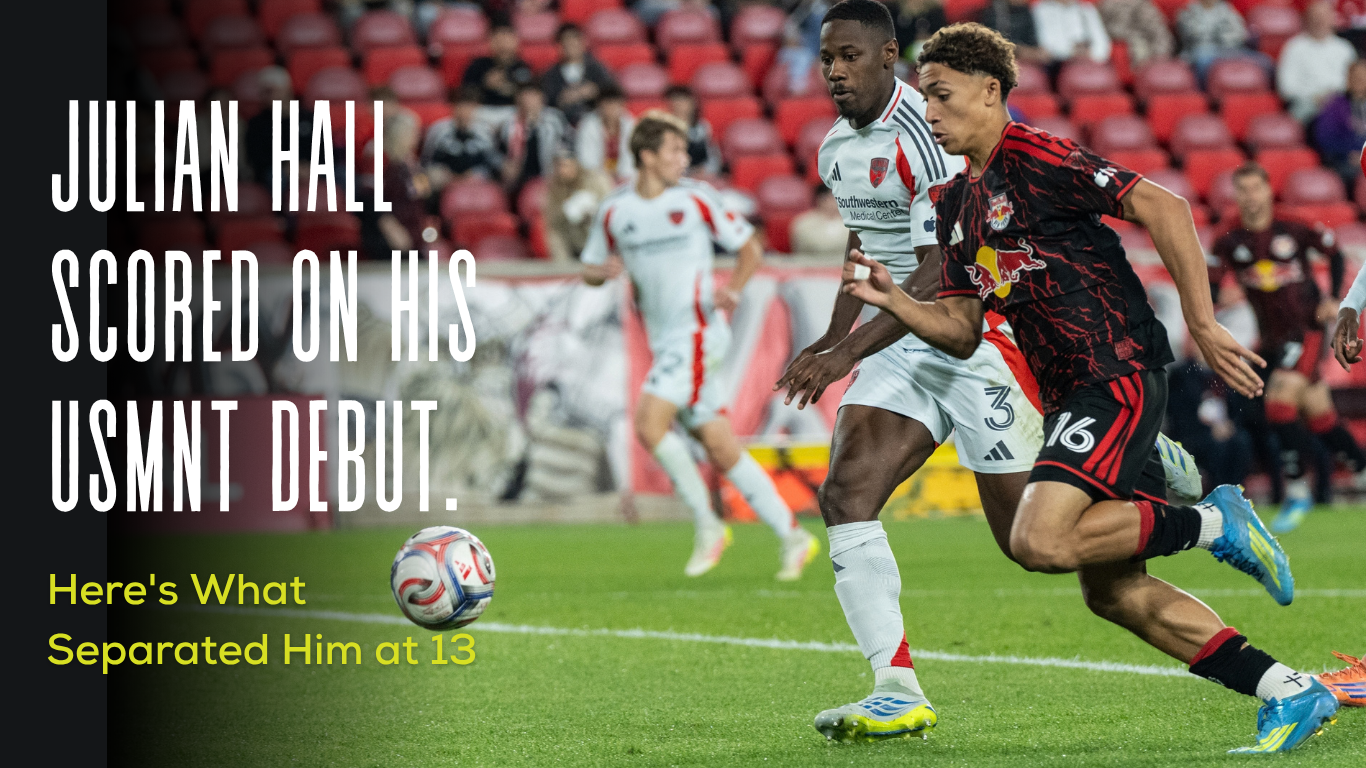
Huge congratulations to Julian Hall again! Earlier this year he became the first former NCE player to score a senior hat-trick. This weekend he stepped up another level, made his senior debut for the U.S. men’s national team against Peru, and scored within ten minutes of coming on. He then set up a second goal before the final whistle.
For those living under a rock for the last 12 months, he’s 18, a homegrown forward at the New York Red Bulls, and is taking US Soccer by storm. Today is a great day to celebrate his achievements and to look at what actually separates players on the Elite Soccer Pathway, because it isn’t what most parents assume.
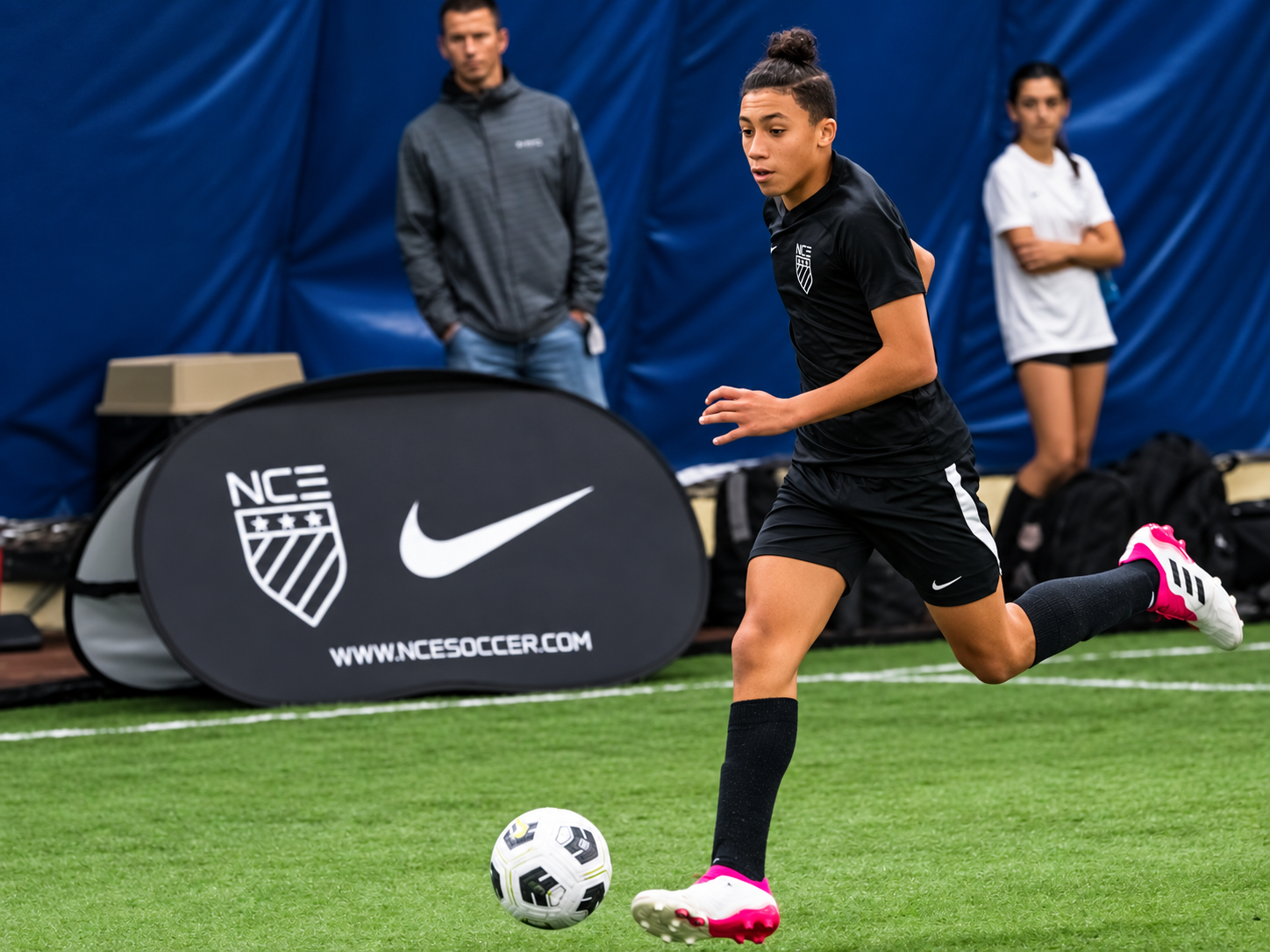
Julian attended our Sunday evening training sessions in Northern NJ for several years while he trained in the Red Bulls Academy system during the week. I can clearly remember working with that group. Julian was a very strong player, but at that time he wasn’t head and shoulders above everyone in that room. Two or three other players in those same sessions were just as good.
What Experience Teaches Us – The Sweet Spot
With the experience of working with players who’ve gone on to play at the highest level, it’s always nice to reflect on what made them different. What was it that enabled Julian to push on while other comparable players plateaued? What were the traits that helped him succeed and how do we foster those traits at NCE?
One characteristic that Julian consistently showed was an inner confidence. He was never outwardly overconfident or arrogant, but neither was he insecure or racked with anxiety. His temperament was perfectly balanced, and it’s a trait we see again and again in players who make it.
There’s a sweet spot on the confidence spectrum and young players often fall on either side of it. Too little confidence, and a coaching point feels like an attack — they shut down. Too much, and it bounces straight off — they’re already convinced they’ve made it. Neither one learns anything.
Julian sat right in the sweet spot. Definitely more towards the arrogance end than the anxiety end, but with enough humility to make him very coachable. In my own personal experience of coming through the ranks at Manchester United and seeing it in teammates over my 15 years as a pro, sitting in the right zone of the confidence spectrum is critical.
Elite Soccer Pathway: Why Talent Alone Doesn’t Predict Outcomes
Every youth team has multiple players who look like “the one” at 12 or 13. Coaches see it constantly — two or three kids who stand out technically, and years later, one has achieved their goals and the others have stopped playing competitively.
The mistake is assuming the gap was talent. In our experience developing players towards the pro game, the separator is almost never raw ability at 12 or 13. It’s far more complicated than that.
Julian’s confidence came from actually being technically good, and knowing it. Not ego. Just knowing what he could do. This was managed and regulated externally too, which is why he maintained enough humility to constantly learn. His mom will have made sure of that! That’s why he could take a coaching point, link it to his own understanding, and get better from it — instead of fighting it or ignoring it.
How NCE Coaches Manage Confidence
Those of you whose children have worked with coach Lee know that he is a master in the art of steering a player’s confidence. He optimizes the skill that all our full-time staff have, but Lee in particular excels in this field. I think it comes from his background as a GK, where mindset and confidence in particular can swing dramatically, based on a player’s performance.
The first step is to know the players as individuals. Only then can you understand how they think and ascertain where they naturally sit on the confidence spectrum. Interacting with players, talking to them and watching closely is vital. Once we know a player, this is when the skill to build or to knock down comes in. I’ve watched our staff take an anxious young player and turn them into someone who feels 10 feet tall. It takes time, but a skilled coach can arm the players with a force field that makes unwanted criticism bounce off. Gradually mistakes are framed as learning opportunities and the players relish the learning process rather than the result. The whole world may be against them, but the mindset we foster enables players to face challenges without any fear.
The same is true if they bring their egos to a session. Lee in particular will take one look at them and they’ll be instantly aware that labels don’t impress him. Hard work, determination, focus and resilience are all that matter. If a player has been told how good they are for too long, the process of bringing them back down to earth begins immediately. If your ego is preventing you from reaching your sweet spot, our coaches will spot it instantly. When you’ve seen and done what we’ve done, then you’ll look at things very differently. Professional sport can be very humbling as those who have reached the top can attest.
Coachability, resilience and emotion regulation are graded traits in the NCE Performance Profile, so we track them with the same care as technical progress. And because players train in ability-based groups on game-realistic problems, it’s quickly obvious who is absorbing a coaching point and who is shutting down or brushing it off, and we coach each of them differently.
A Parent’s Role – The Master Communicator
Parents have a huge influence on where their son or daughter sits on the confidence spectrum. We see these effects constantly at NCE.
A parent’s verbal and non-verbal communication post-game or training session can have some of the biggest effects. It’s incredibly hard to get this right, and even if you don’t say anything at all, you’re still communicating to your child and they will pick up on it. The master communicator, like coach Lee, will use words, tone of voice and body language to steer a child’s confidence level towards the sweet spot. If they’re consistently coming off the field thinking they’re god’s gift, you may need to bring them down a peg or two. If they’re racked with self-doubt you may need to build them up.
Knowing where the sweet spot for soccer lies is one thing, but perfecting the skills that enable your child to live in that sweet spot is another. The key is enough confidence, character and personality to consistently perform, balanced with enough humility to never stop learning.
Ask yourself, is my son or daughter too anxious on a match day to perform like they do when they’re playing with their friends in training? If the answer is ‘yes’ then there’s work to be done!
What This Means for Your Player Right Now
Thankfully we know the development process well and are here to help support parents navigating this for the first time.
If your child is 11, 12, or 13 and shows real ability, the question isn’t how they compare to the kid next to them. It’s about understanding where their sweet spot is and maintaining their position within it, by balancing the confidence to perform with the humility to grow.
If we can do that today, it will pay dividends later.
Continue Your Player’s Development Journey
If long-term player development is the priority, the environment matters more than the schedule:
- Explore the Elite Soccer Pathway
- Discover High-Performance Soccer Training Programs
- Learn about Pro Pathway Camps
Experience International Development Tours
