
This summer’s World Cup gave us a masterclass in how not to compete. Across the semifinal and the final, one of the tournament’s best teams let frustration spill into confrontation, dissent, and ugly scenes that had nothing to do with football. It was a bad example for the millions of kids watching — and it’s exactly the kind of moment we use at NCE to teach the difference between competing hard and losing control.

Controlled Aggression: The Happy Medium
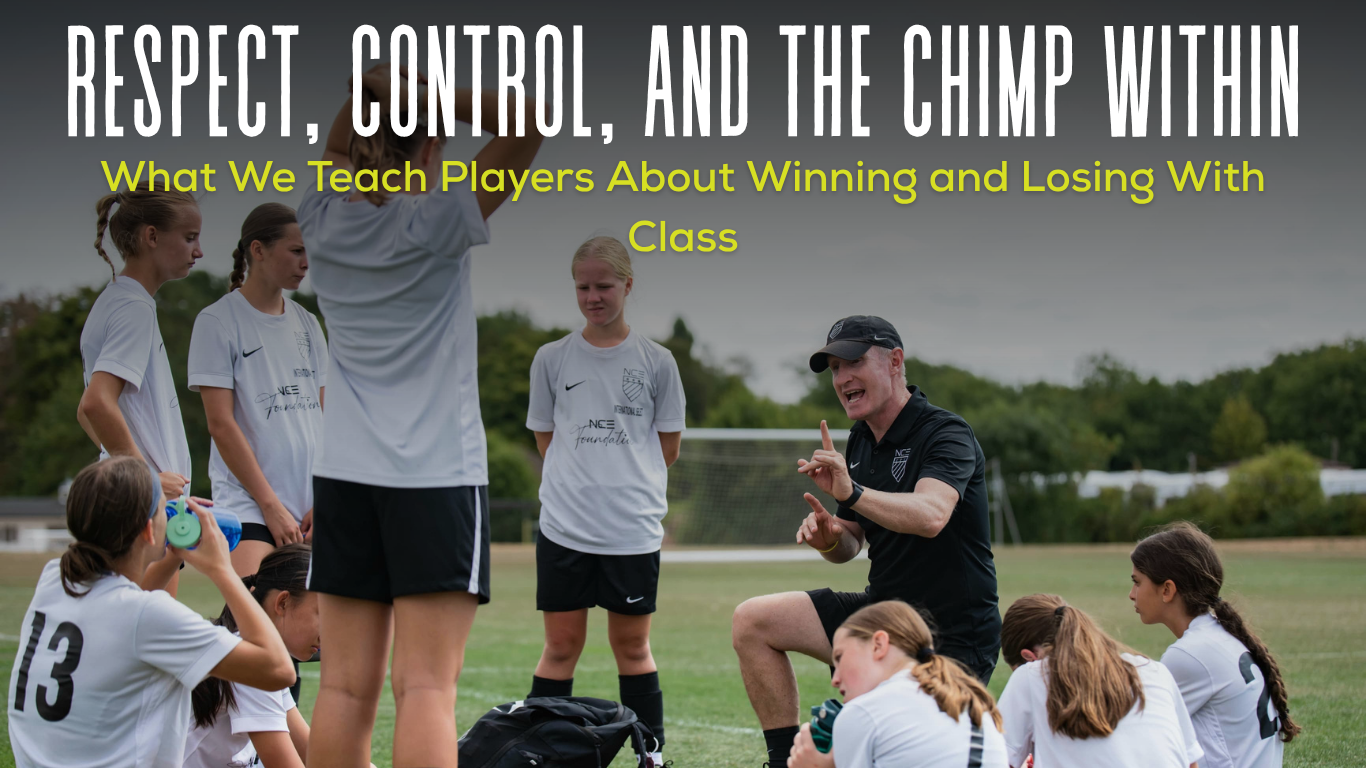
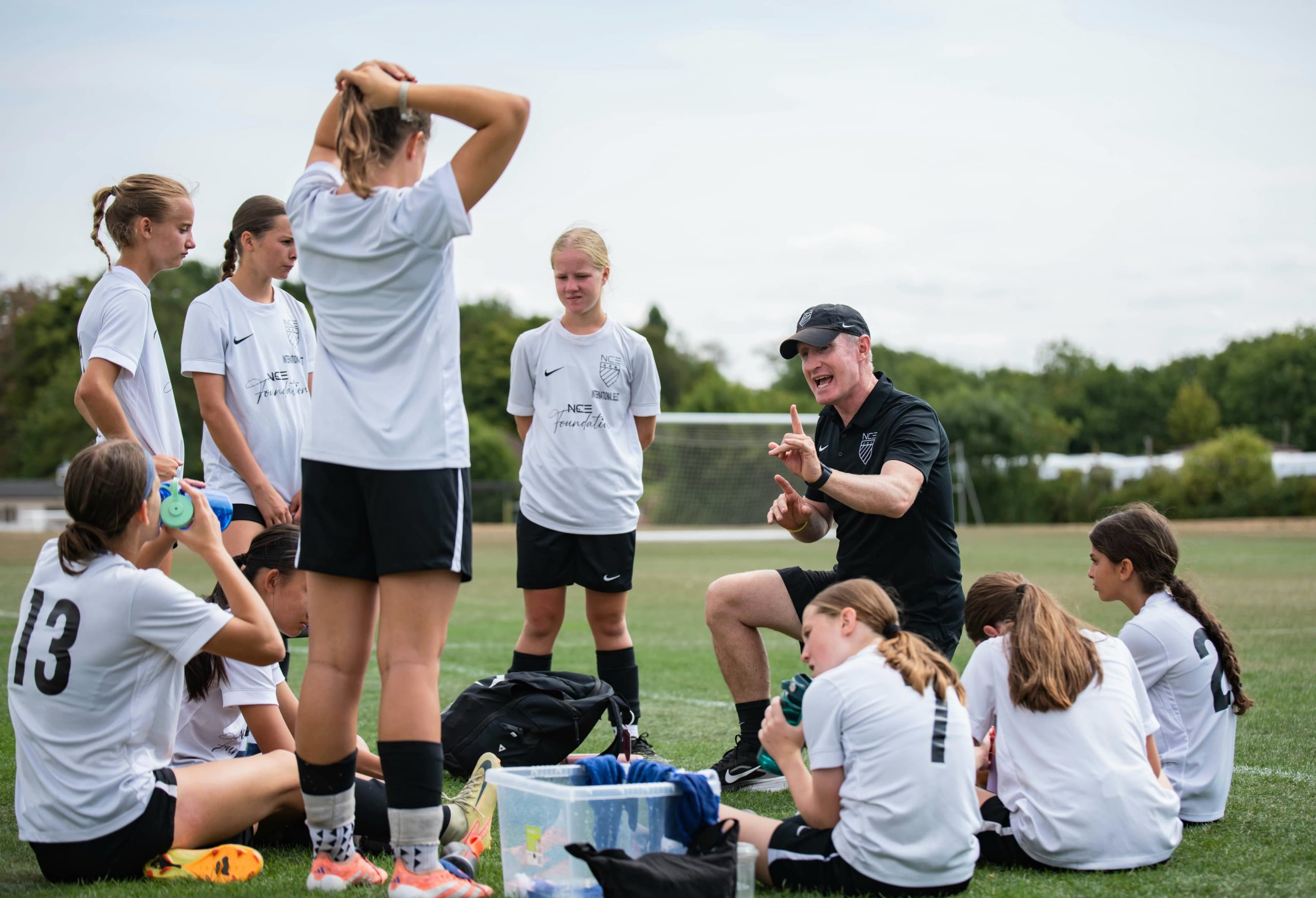
During our most recent Pro Academy tour, I kept coming back to the same message with the girls: you have to be aggressive, you have to fight for every ball — but it has to be controlled. Too passive, and you get played off the park. Too wound up, and you stop making good decisions. The players who stand out are the ones who find that middle ground — competitive edge without losing their head.
That balance isn’t the same for every player. Some are naturally more fiery, some naturally more passive — everyone sits somewhere different on that spectrum, and that’s just temperament, not something we’re trying to erase. It’s a word Alex Ferguson leaned on constantly at Manchester United — whether a player had the right temperament to handle the pressure, the setbacks, and the moments that didn’t go his way. Technical ability got a player noticed. Temperament decided how far it took him.
From a coaching perspective, it’s generally easier to put guardrails on a player who already competes hard than to build that fire in a player who doesn’t naturally have it. But that doesn’t mean the more passive player is left as they are — we work just as deliberately to bring more assertiveness and competitiveness out of those players. Both are coaching challenges. One is generally the more straightforward of the two.
Control also comes with age. As players mature, they naturally gain more command over their emotions — that’s not something we’re teaching so much as something we’re accelerating and reinforcing while it develops on its own.
The Chimp Within
Steve Peters’ The Chimp Paradox gives us a useful way to explain this to players: there’s an emotional, instinctive part of the brain — the “chimp” — that reacts first, and a more rational part that’s capable of stepping in if a player has trained it to. The chimp isn’t the enemy. It’s what gives players their competitiveness and drive. The problem starts when the chimp takes over completely and starts making decisions on its own.
What we saw from Argentina across both of those World Cup games looked like the chimp in charge — reacting to every knock, every decision, every provocation, instead of staying in control of the response. Contrast that with the image of Messi embracing Yamal after the final whistle, in the middle of his own disappointment. That’s the rational brain staying in the room even when the chimp has every reason to take over.
What We Teach at NCE
Respect for officials, always. No dissent, no confrontation, no reaction to a decision beyond what the captain or coach handles. That’s non-negotiable, and we train it the same way we train anything else — through repetition until it holds under pressure.
Aggression with control. We want players who compete hard, win their duels, and don’t back down. We don’t want players who let that competitiveness tip into something that isn’t about the game anymore.
The reaction is the skill. We’re not trying to remove emotion from players. We’re teaching them to own the gap between what they feel and what they show.
The Point Worth Making to Parents
Watch how a player behaves in the ten seconds after a bad decision goes against them, or in the ten seconds after the final whistle in a loss. That’s where the anger and frustration surface — the same emotions that come with genuinely wanting to win. How a player handles that moment is a direct reflection of the standards we’re building at NCE: compete hard, want it badly, and still walk off with class.
A Lesson That Outlasts the Game
None of this is really about soccer.
Every player who comes through NCE will eventually stop playing — most well before college, some after it, a handful beyond that. What doesn’t stop is life throwing decisions at them that feel unfair, moments that go against them, situations that make them angry. The player who’s learned to feel that frustration without letting it control how they act is better prepared for all of it, not just the next match.
That’s why we take this seriously. Respect isn’t a football value we’re borrowing for a season. It’s a life skill we’re using football to teach — and it matters just as much for the player who never plays past sixteen as it does for the one who goes on to a professional career.
Continue Your Player’s Development Journey
If long-term player development is the priority, the environment matters more than the schedule:
- Explore the Elite Soccer Pathway
- Discover High-Performance Soccer Training Programs
- Learn about Pro Pathway Camps
Experience International Development Tours
