
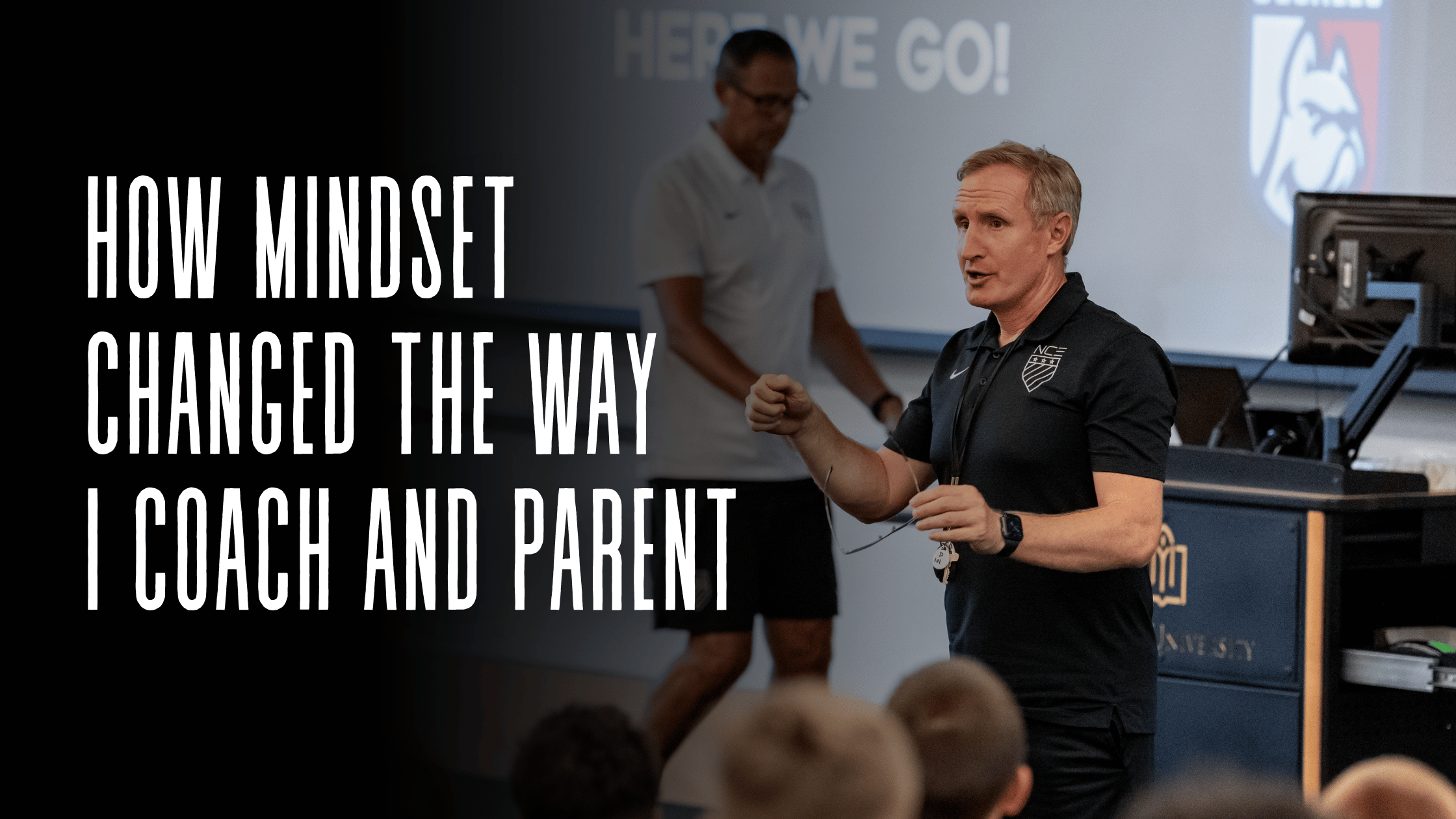
When I first read Mindset by Carol Dweck, I expected it to make me a better coach. What I didn’t expect was how deeply it would influence me as a parent — and how much it would help me understand my own journey as a young player.
Dweck’s ideas about the growth mindset — the belief that ability can be developed through effort, learning, and persistence — explained so much about the highs and lows of my own playing career. It helped me see clearly why my development began to plateau as I transitioned from youth football into the professional game.
The Plateau Years
Between the ages of 18 and 20, I hit a wall. I suddenly found myself facing challenges I’d never encountered before — physical setbacks, fierce competition at Manchester United, and the mental grind of professional football. For the first time, talent alone didn’t seem to guarantee success, and I didn’t yet have the tools to deal with that.
Looking back now, I realize I’d grown up with a fixed mindset. I’d been praised for being talented, for being technically good, for being “a natural.” So when the game got harder, when I started struggling, I questioned my ability rather than seeing those moments as part of the learning process.
I didn’t yet understand that setbacks are part of growth — not signs that you’ve reached your limit.
Lessons for Young Players
That realization changed how I coach. I now see enormous value in helping players face challenges early. Learning to struggle, to fail, to recover — those are vital developmental experiences. When young players are encouraged to take risks, to make mistakes, and to view those moments as feedback, they become resilient.
They develop coping strategies that will serve them throughout their careers — and their lives. The players who learn this early become the ones who can adapt, persevere, and ultimately thrive in high-pressure environments. This is one of the reasons being an early developer is a real disadvantage.
Parenting Through a Growth Lens
As a father of three boys, Mindset has completely reshaped how I approach parenting. Instead of praising my sons for being “clever” or “naturally talented,” I focus on their effort — how hard they work, how they respond when things get difficult, and how they handle frustration.
I want them to understand that progress is built on persistence, not perfection. That mistakes aren’t failures — they’re opportunities to learn something new.
It’s not always easy, especially in a world that celebrates results and rankings. But helping children see value in effort builds confidence that lasts far longer than any trophy or medal.
From Player to Coach to Parent
The irony is that the challenges I struggled with most as a young player have now become my greatest strengths as a coach and a parent. Understanding why I plateaued back then allows me to help others avoid the same trap — to help players embrace the hard parts of development rather than fear them.
At NCE Soccer, we work every day to create an environment where players love working hard, take pride in effort, and aren’t afraid to fail. Because when a young person learns to enjoy the process — to fall in love with improvement itself — there’s no limit to what they can achieve.
Connecting to the NCE Performance Profile
These lessons sit at the heart of the NCE Performance Profile, particularly within the Psychological Competencies — Resilience, Determination, and Coachability. These aren’t just traits we hope players develop; they are measurable, teachable qualities that shape success on and off the pitch.
By fostering a growth mindset in every player, we’re not only developing better footballers — we’re helping young people build the character, courage, and self-belief to handle whatever challenges life throws their way.
